

Manufacturing Insights
Most Machine Shops Can Hold a Tolerance. Not Many Can Wire an Aircraft.
July 5, 2026
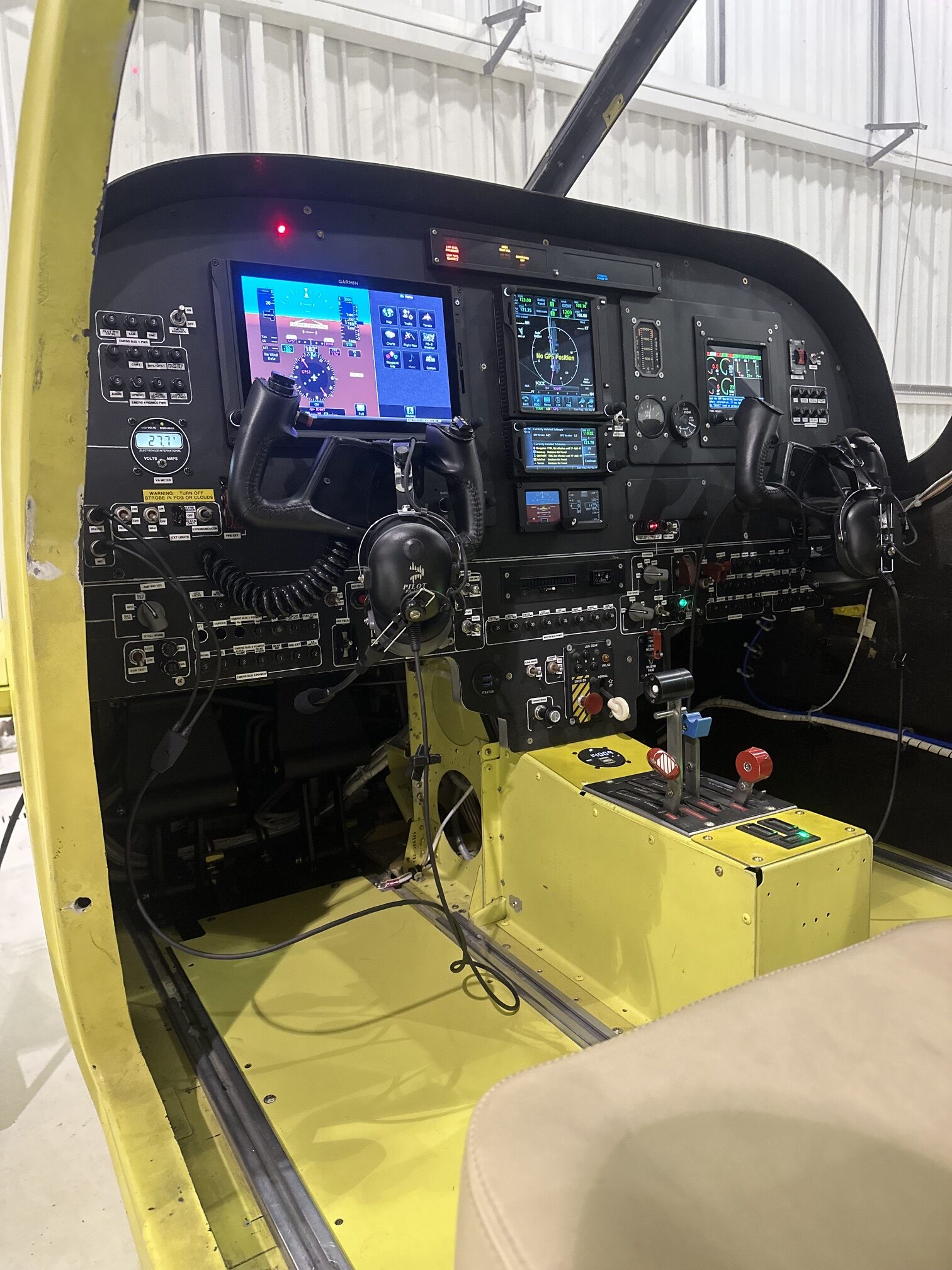
The First Time Someone Put on the Headset, It Worked.
Every aircraft has a nervous system. Wires running from the cockpit to the engine, the landing gear, the fuel system, every sensor and instrument on board, carrying power, signals, and information to everywhere it needs to go. When it’s working, you don’t think about it. When it’s not, nothing else on the aircraft matters.
On this build, that nervous system didn’t exist yet. It had to be built. Every harness, every connector, every run of wire from one end of the aircraft to the other.
That’s not a small job, and it’s not really a “machine shop” job either, at least not the way most people think of one. But it’s a capability we have, and most shops don’t.
The wiring touched everything. The engine, a Pratt & Whitney PT6A-66B, needed wiring for its sensors, including internal monitoring like turbine temperatures. The avionics needed power and signal wiring throughout the cockpit. Beyond that: GPS, radio, beacon, airspeed and static systems, lighting, landing gear, hydraulic pumps, fuel pumps, solenoid valves, fuel shutoff valves, and every breaker tied into the system.
For anyone who knows wiring, this was built to AS50881, the SAE standard governing wiring and EWIS design for aerospace vehicles, and AC 43.13, the FAA’s reference for acceptable methods and practices on aircraft electrical systems. Wire selection, connector selection, clamping, splicing, grounding and bonding, wire marking. Every harness was built the way those standards say it has to be, not just wired to work but wired to hold up and be inspectable for the life of the aircraft
Some of it got built directly in the aircraft, in place, as it would be routed. Some of it got built on a harness form board first. A board that holds connectors and wire runs in the exact configuration they’ll take inside the aircraft, so the harness comes together correctly before it ever goes in. We built one of those too. Used it once. That’s the kind of thing you build because the job calls for it, whether it gets used once or a hundred times.
Building it is one thing. The real moment is when you turn it on.
We powered the system up for the first time on auxiliary power, in the aircraft. The avionics lit up. Trim tab indicators started moving. The surfaces themselves moving in response, the same thing a pilot would see and feel in flight, now happening for the first time with the aircraft sitting in the hangar.
Then someone put on the headset.
Radio chatter, clear, coming through, working, for the first time on a system that didn’t exist a few months earlier. That’s the moment that sticks. Not because anything dramatic happened. Because something that wasn’t alive, was.
The same capability applies anywhere a system needs to be wired from nothing. Not just aircraft. Equipment, machinery, any application that needs a harness built to standard, routed, protected, and tested before it’s trusted.
This isn’t separate from what we do. It’s part of it. A capability sitting alongside the machining, fabrication, and welding, ready for the jobs that need it.
Parallax Manufacturing. A different angle on what a machine shop can be.
If you’ve got something that needs this kind of work, get in touch.